


Have you seen the pants that workmen wear in Japan?
They’re those really baggy trousers that taper sharply at the ankles. I used to call them ninja pants, but they’re actually called Nikka Pokka — or just Nikka — a name that comes from the English word “knickerbockers.”
With the Japanese workmen clothing store “Workman” increasingly releasing trendy utility clothing for women, nikka pokkas have become fashionable among young women for everyday wear. (Even Anna Tsuchiya — a former major Japanese fashion‑mag model — has been seen modelling them.)
So my first pants-sewing project was going to be Nikka Pokka Pants 😀.
Jump down to:
Sewing pattern for Nikka Pokka “ninja” pants
Below was my blueprint for my Nikka Pokka pants sewing-without-patterns adventure.
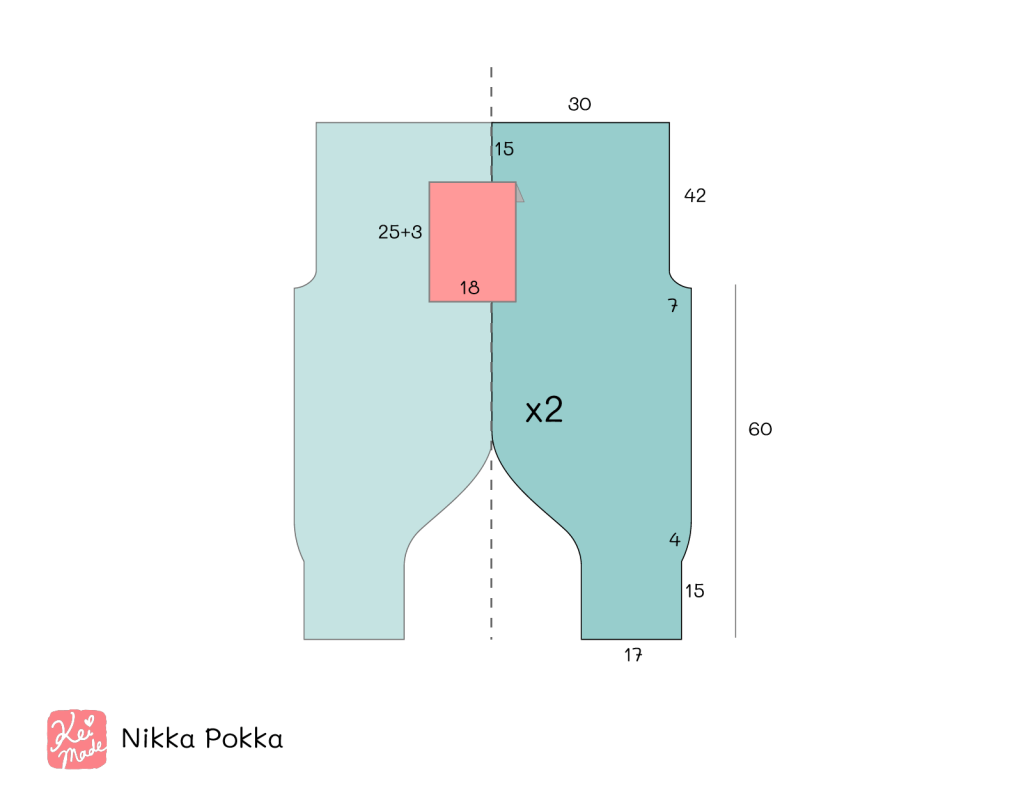
To make the pants, the pattern was directly drawn onto the fabric using a chalk pen and a ruler.

They stole my imagery; they are unrelated to me.
There are fake websites selling my pattern – using my imagery with my watermark on them. They are unrelated to me, and there is no pattern file available to be downloaded. An example website is Osalesov which has been reported as a scam website.
Steps for making Nikka Pokka pants
The basic steps for making these pants were below.
Update: I’ve posted a detailed step-by-step of How to sew pants/shorts in another post.

In words and photos:
- Fold fabric over vertically and draw the pattern aligning the left side to the folded edge of the fabric (so when it’s cut out and unfolded it’ll be one leg’s worth of fabric with the outer edge attached). Mirror for the other side. Cut them out.
- Cut out two external pocket rectangles. Fold the top over, and roll hem the other 3 edges (easier than folding and sewing 3 edges).
- Lock stitch the pockets to the pants fabric. (I sewed it 15cm below the to-be waist line and two-thirds towards the front so they’ll be easy to access.)
- Connect the inner leg seam of each side together.
- Place one leg inside the other and sew the crotch.
- Serge the waist, then fold it over and lock stitch it, keeping a gap to insert elastic.
- Insert waist elastic.
- Try it on to check the length, decide how much to hem, and sew the two hems.
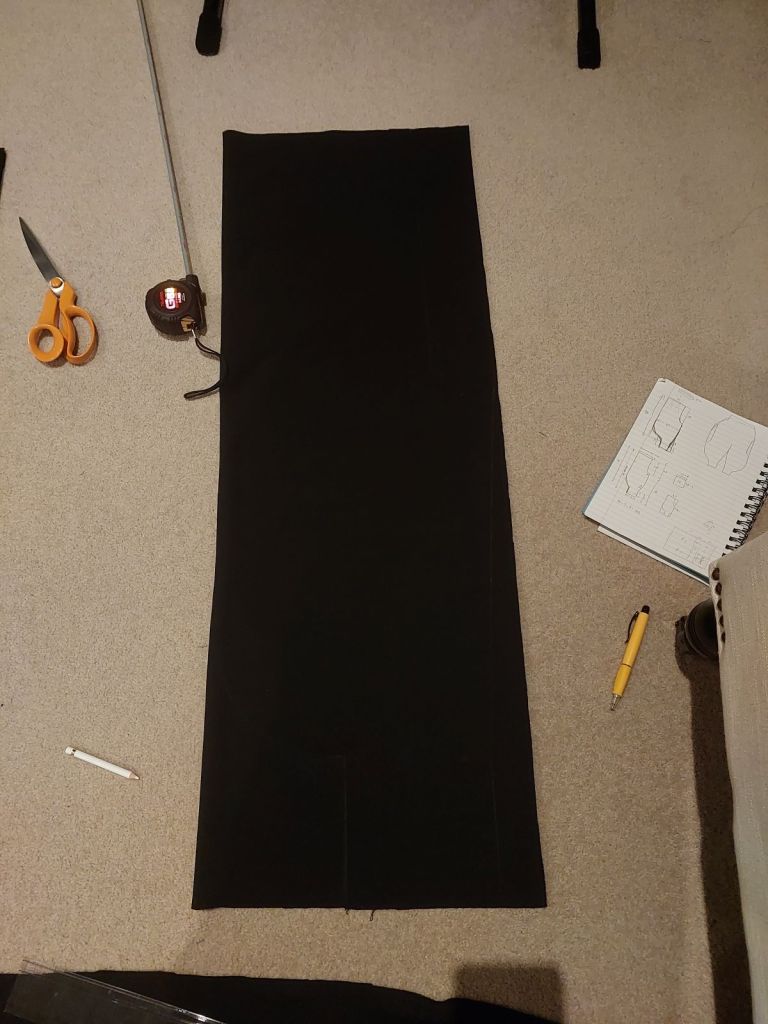
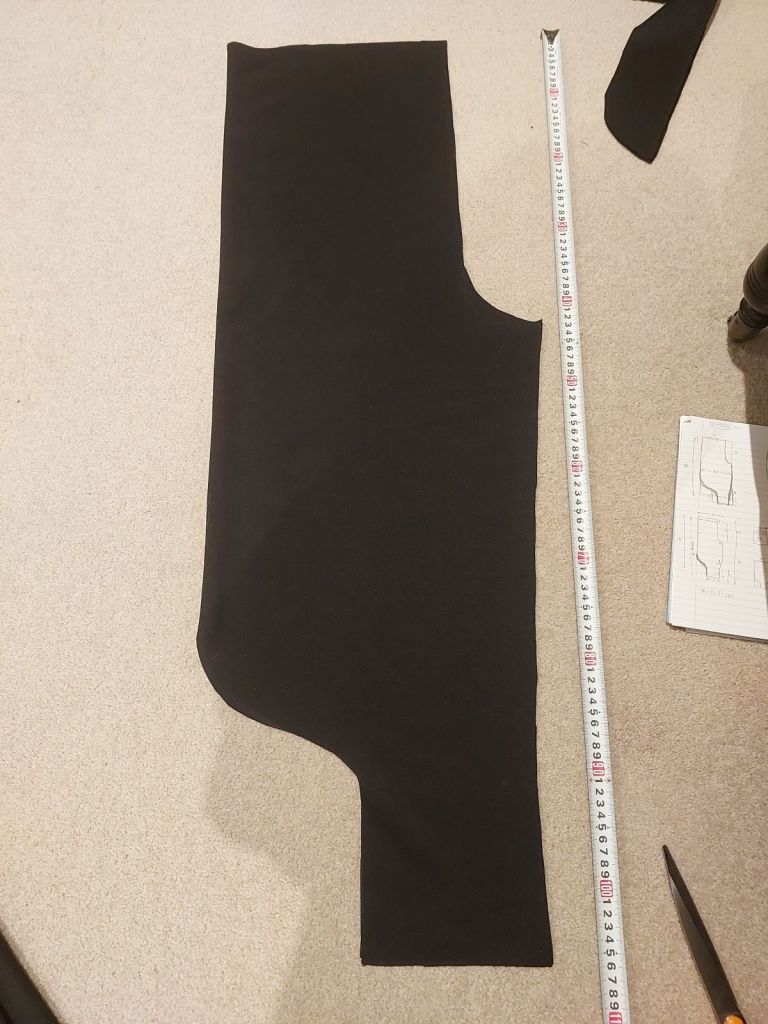

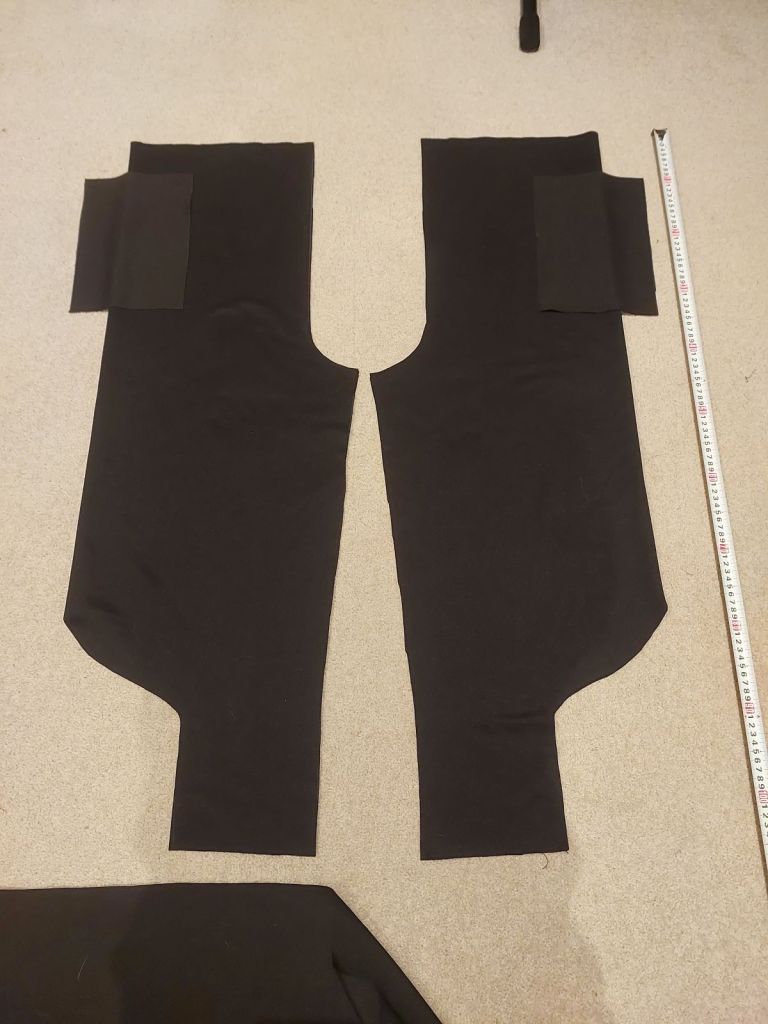


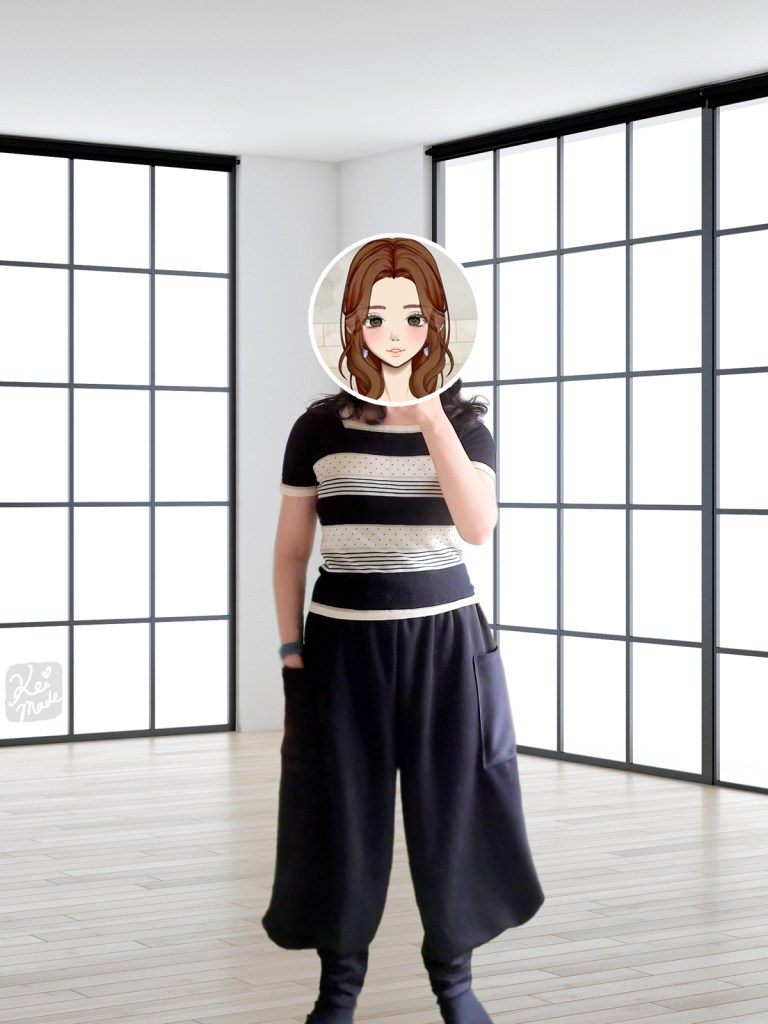
Pretty sweet for my first pair of homemade pants!

Baggy Pants Sewing Pattern with Elastic Cuffs and Pockets (Free PDF & How‑To)
These pair of baggy pants are so comfortable, it feels like I’m wearing nothing at all 😆. Here’s mysewing pattern and how I made it…
History of Nikka Pokka pants
Nikka Pokkas (also known as knickerbockers) trace their origins to the loose-fitting knee-length breeches worn by young children in medieval Europe.
When Dutch immigrants settled in the United States during the 18th century, these pants became associated with “knickerbockers.” Thanks to their practical design that allows unrestricted movement but stays put due to the tapered cuffs, knickerbockers found favor in adult sportswear such as cycling, baseball, golf, and horseback riding.
In the 1900s, knickerbockers made their way to Japan and were adopted as sportswear, military uniforms, and for mountaineering. As a result of their comfort and flexibility, knickerbockers gradually found their place as work attire on construction sites.
In particular, workers engaged in tasks at elevated heights found these pants highly compatible, prompting roofing professionals to tuck their knickerbocker cuffs into traditional split-toe tabi socks, eventually establishing this style as the hallmark attire for roofing work.
Why Japanese workmen wear Nikka Pokka pants
They say Japanese construction workers opt for Nikka Pokka pants due to their ability to:
- Facilitate easy movement (roomy crotch and legs allowing unhindered leg mobility)
- Provide heat management (loose fit and breathability)
- Gauge wind strength (through the fluttering of the fabric)
- Mitigate injury risks (sensing impending obstacles, though this is debated)
- Enhance balance at heights (baggy section aiding balance, akin to a tightrope pole)
- Look cool (it’s a fashion statement, though some associate it with rough people)
I can definitely agree that Nikkas look cool, and their airy comfort allows for unrestricted leg movement without the hems getting in the way.
With the rise of loose-fitting fashion trends during COVID-19, it’s no surprise that Nikka Pokkas also gained popularity among young women for everyday wear.



Comments (2)
Richard Pachecosays:
March 19, 2026 at 12:14 pmare the measurements in centimeters or inches?
Kei Madesays:
March 19, 2026 at 2:23 pmHi there, the measurements are in centimetres.