


The traditional Urauchi method of sumi-e backing is pretty tricky. Jigoku-uchi is a simplified way of backing ink wash paintings that makes life much easier, with pretty good success.
Why Jigoku-uchi?
“Urauchi” is usually needed for artworks created on Japanese paper, such as sumi-e (ink wash paintings) and calligraphy.
Washi (Japanese paper) shrinks when moisture, like ink, is applied. So sumi-e paintings, which use a lot of water as well as ink, become very wrinkly. Urauchi is done to smooth out these wrinkles and sagging.
But traditional Urauchi (called Nage-uchi) involves some tricky steps, like using a ruler to slowly lay down wet artwork onto glue-coated backing paper, and sticking the glued artwork onto a plank of wood up right to dry it out straight.
Jigoku-uchi is a simpler way of applying backing paper to ink wash paintings. In the Jigoku-uchi method, the glue is applied to the artwork, and dry backing paper is pressed down onto it.
Jigoku-uchi Video
This video from Turara-an got me to experiment with the Jigoku-uchi method. (BTW, Jigoku means hell 😂)
Jigoku-uchi method that worked for me
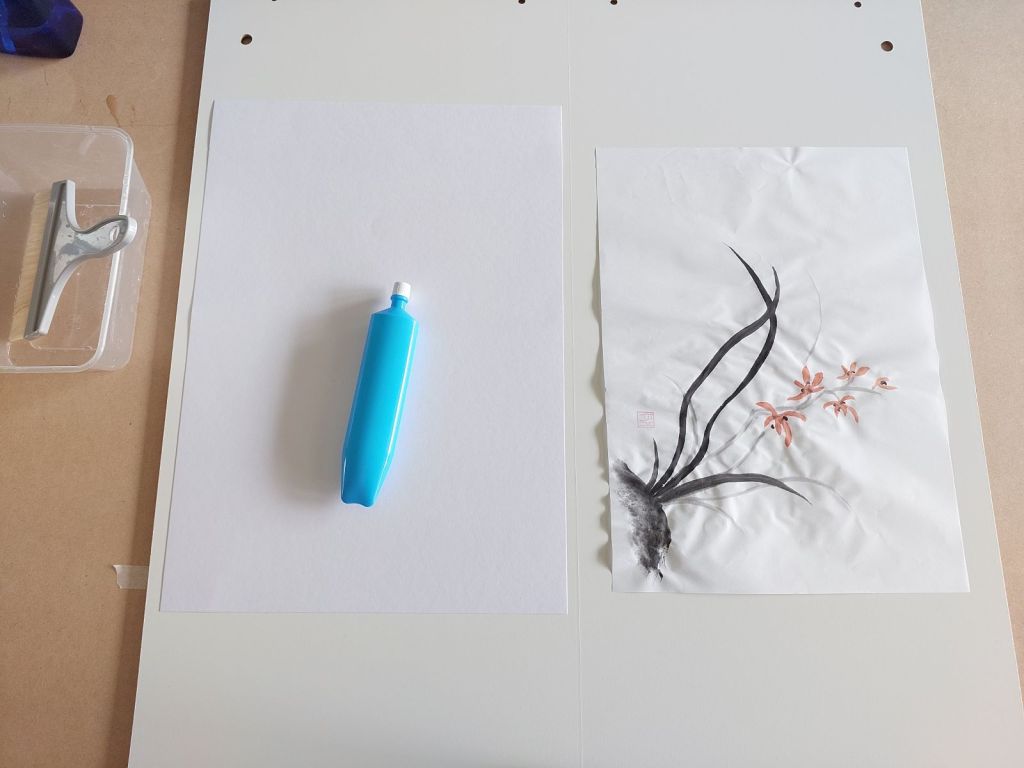

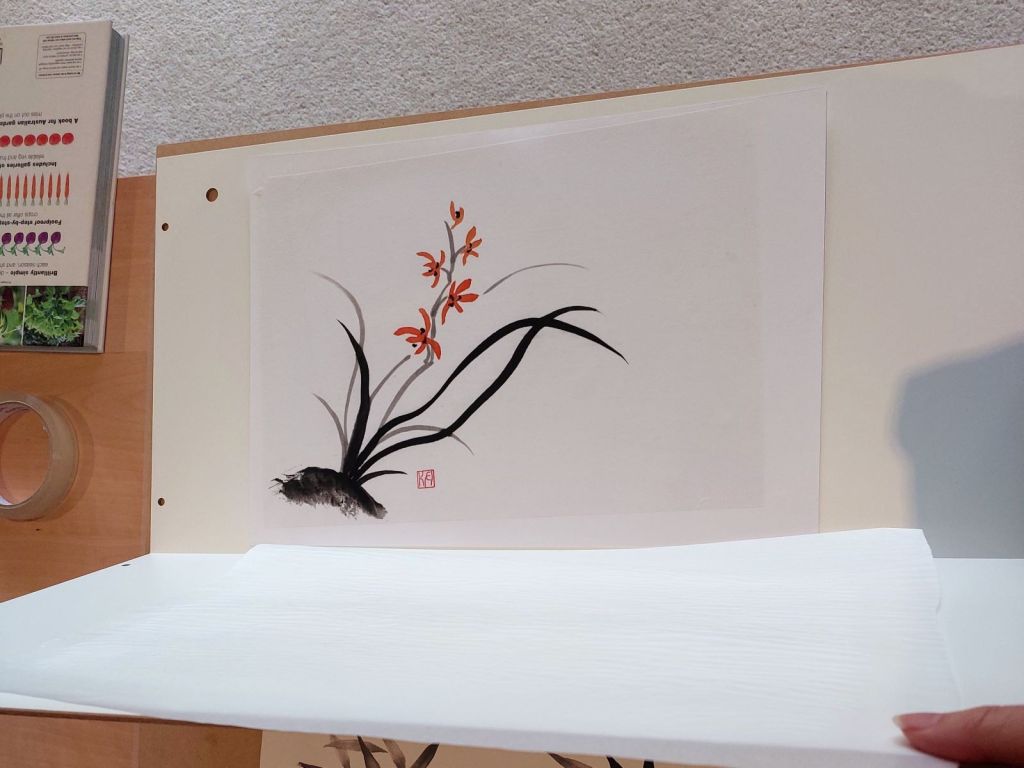
- Place artwork upside down on a MDF board*.
- Spray artwork with water mist so the whole page becomes wet. Wait a few seconds for it to be evenly saturated.
- Dilute starch glue (Nori tubes can be bought from Daiso) with water until the it drips slowly off a hake-brush (also can be bought from Daiso).
- Brush diluted glue with hake-brush onto back of artwork. Brush out any wrinkles – you can be slightly rough without the paper tearing.
- Place a sheet of paper (can just be Gayoshi drawing paper again from Daiso) on top. Press down and glide outwards.
- Peel artwork and backing paper (together) off the MDF board, and place it on a dry part of the MDF board right way up.
- Put a flat piece of board & a heavy book on top of the artwork. Leave it to dry for a day.
*MDF board tends to work well as it soaks up moisture. Using a slippery coated board makes artwork crinkle as the moisture can’t escape.
Sumi-e paintings can now be hung up
Now that the paintings are smoothed out and strengthened with backing paper, they can be hung up on display!
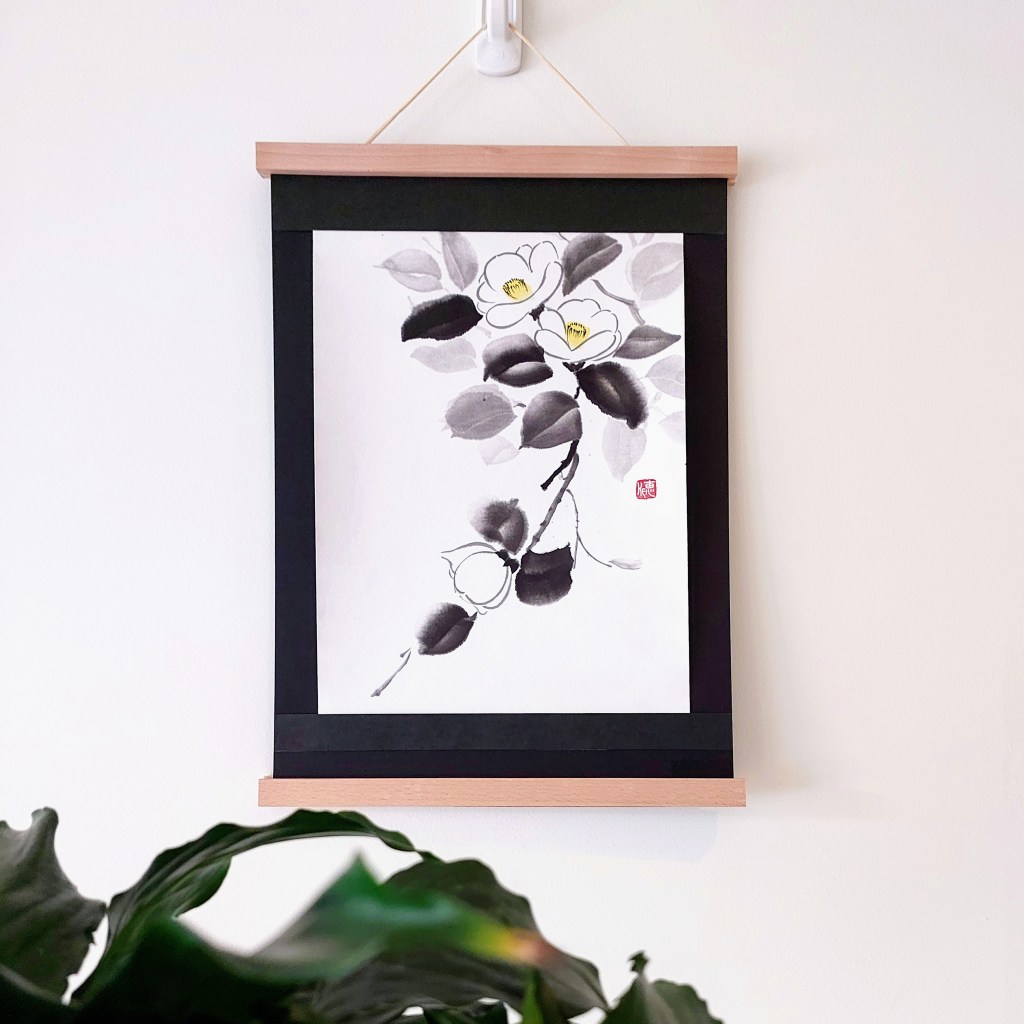
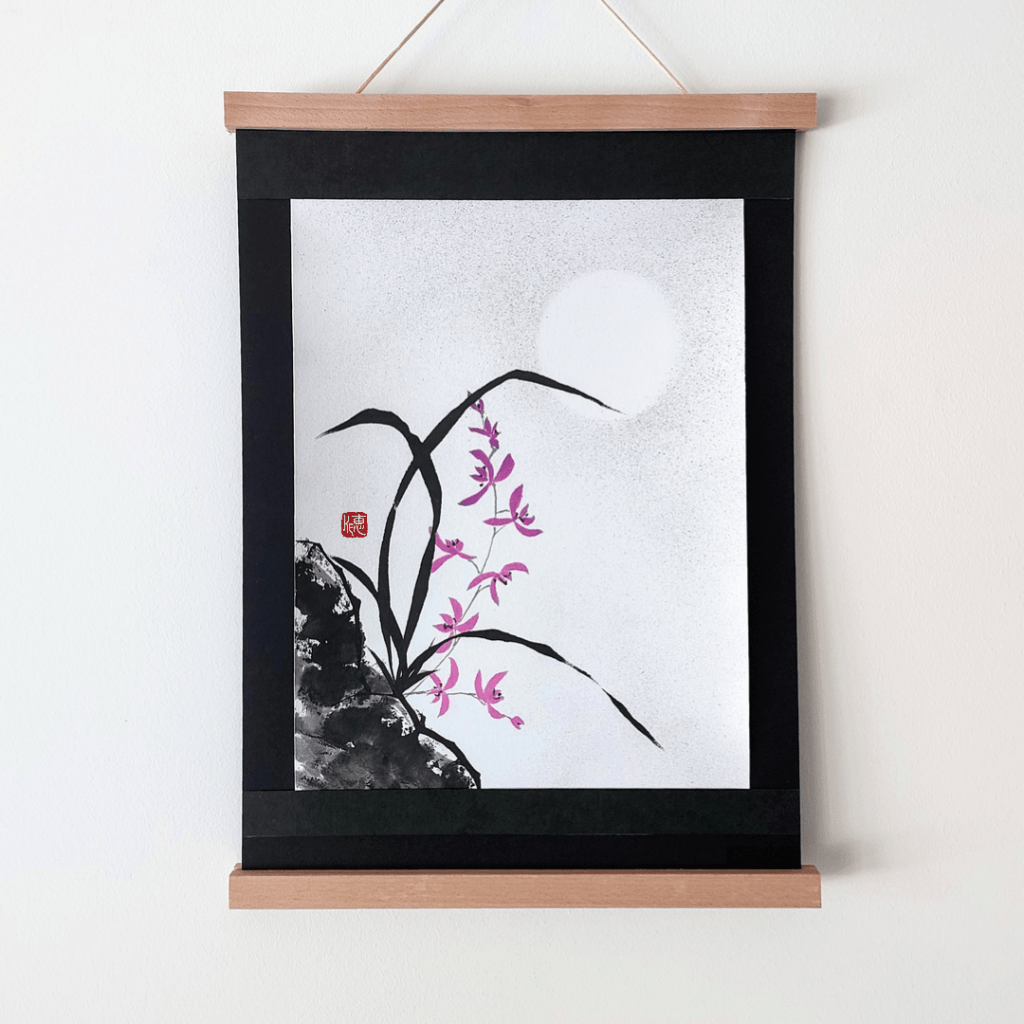
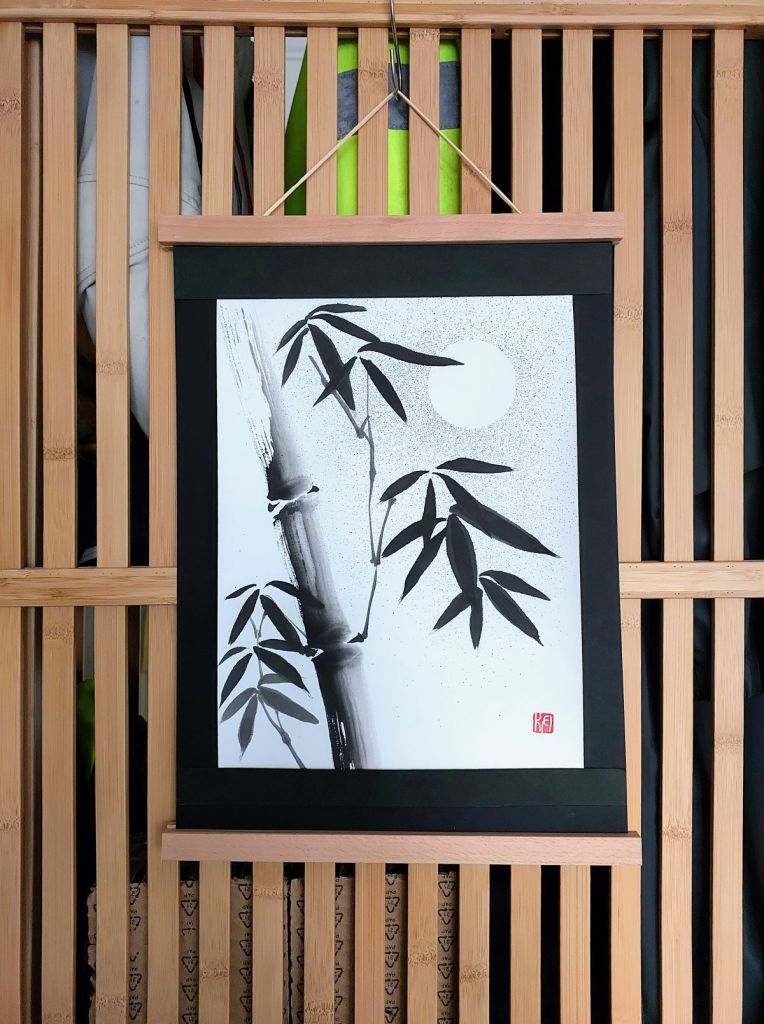
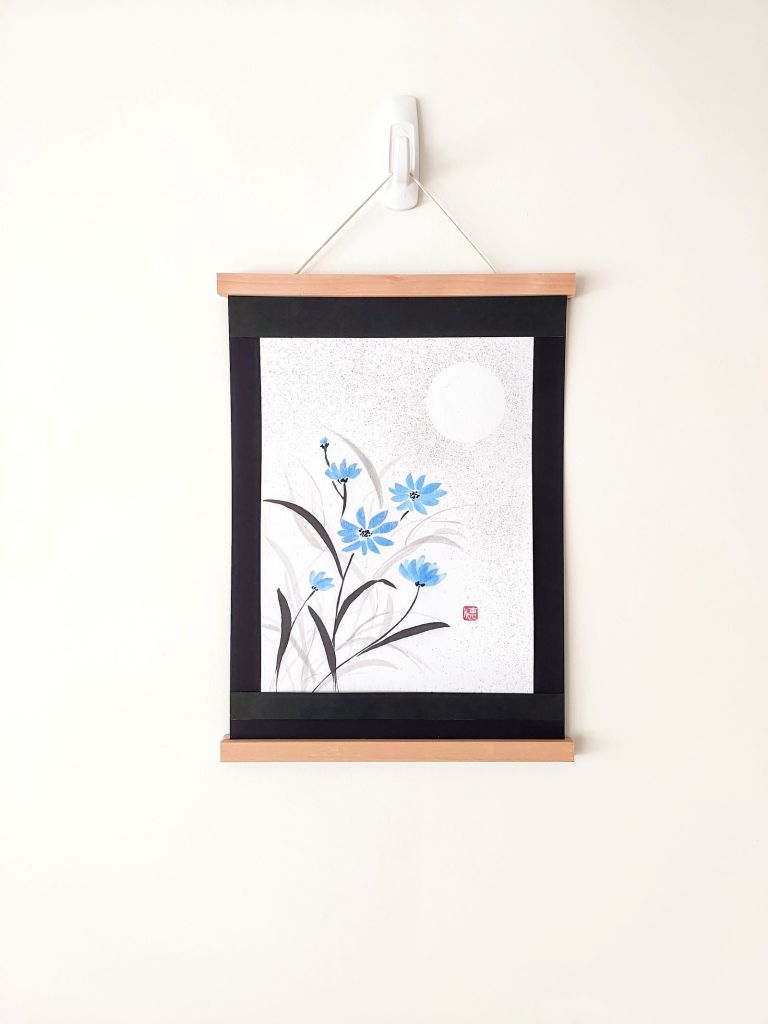
The edges still become curled though, so they’re better to be displayed inside a picture frame. But no more wrinkles, and the artworks pop with higher contrast against the white background!



Leave a Reply