


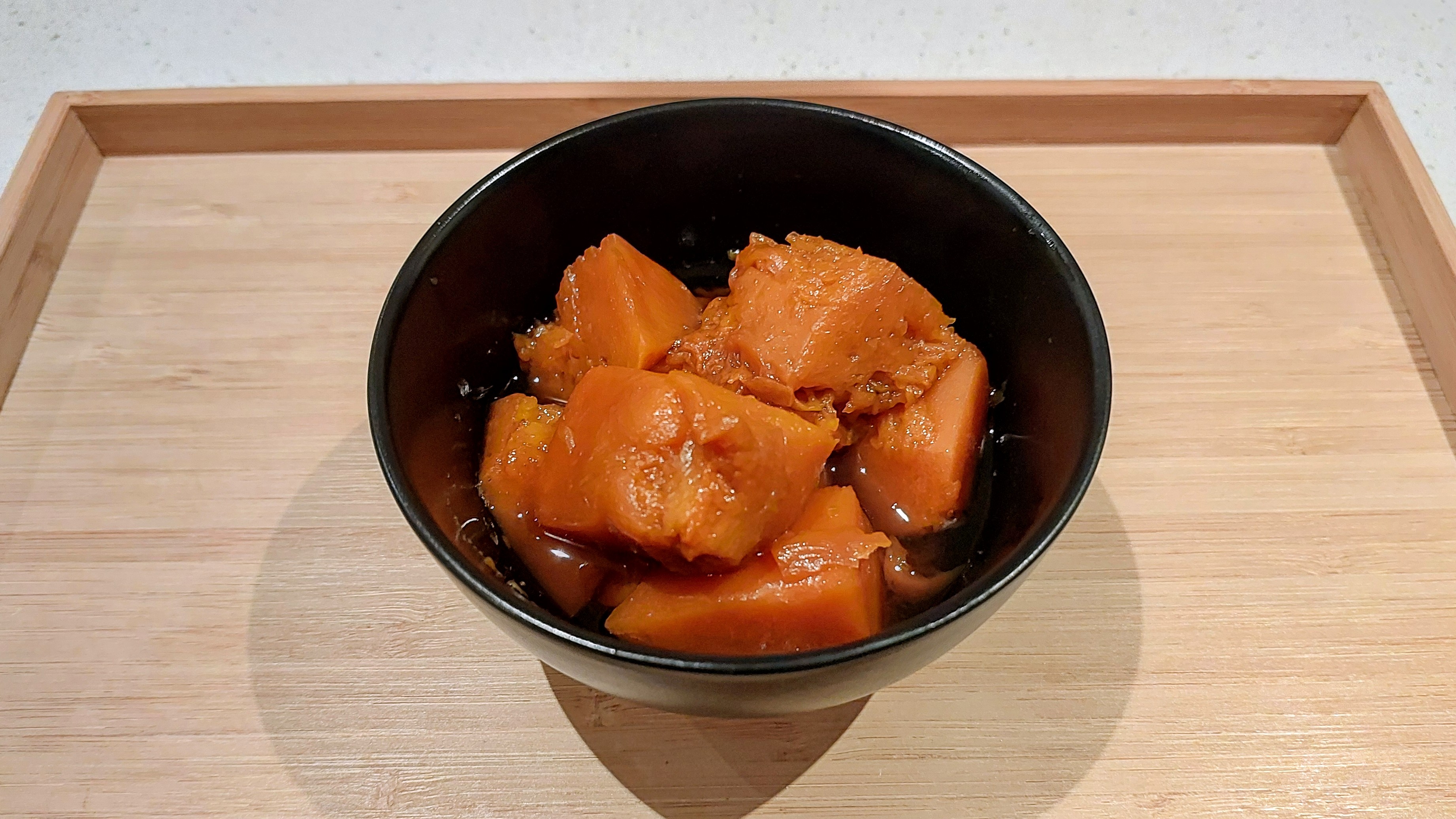
Kabocha means pumpkin, and Nimono literally means boiled thing 😀 This is a super simple recipe that makes a great side dish or snack.
Ingredients
- Kent or Jap pumpkin, 1/4 of a whole
- Water, 200ml
- Soy sauce, 2 tablespoons (30ml)
- Mirin, 2 tablespoons
- Sake, 2 tablespoons
- Sugar, 1.5 tablespoons
How to make
- Cut pumpkin into cubes.
- Throw all ingredients into a pot.
- Boil for 18 minutes (or until soft) with a drop lid.
(The boiling mixture doesn’t need to fully cover the pumpkin, but if the pumpkin is large increase the mixture at step 2.)

Experiments
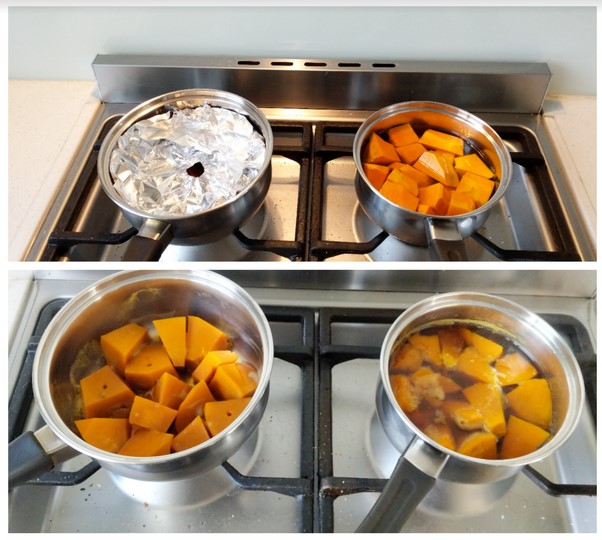
I tried two contrasting methods from Kurashiru and Shirogohan (as well as a small handful of others) before getting to my final go-to recipe for simmered pumpkin. One called for a staggered approach, while one was very simple. The easiest method won the overall test 🙂 Both recipes were quite sweet though, so the sugar was reduced.
History & Culture

What’s the history of Kabocha-no-nimono? Any interesting facts?
Kabocha no nimono is a dish in Japanese cuisine where pumpkin is simmered in broth or soy sauce along with other seasonings. While the specific origin of simmered pumpkin is not well-documented, Nimono is a traditional cooking technique, and so the simmered pumpkin is considered a traditional home-cooked dish in Japan with a long history.
Kabocha is often harvested during fall and winter and is frequently enjoyed in Japanese households during this time. Making kabocha no nimono aligns with the seasonal produce and the enjoyment of seasonal flavors.
The vivid orange color of kabocha pumpkin adds visual appeal to dishes. The simmering process preserves the color and shape of the pumpkin, resulting in an aesthetically pleasing presentation of the dish.
Kabocha pumpkin is rich in nutrients like Vitamin A, carotenoids, and dietary fiber, making it a healthful addition to meals. Kabocha no nimono, as a dish containing these nutrients, contributes to a balanced diet.



Leave a Reply