


The search for a simpler way to back sumi-e paintings led to Kuretake’s Urauchi Paper. An extra step added to the official instructions led to wrikle-free ink wash paintings worth displaying.
I used to back my ink wash paintings using the Jigoku-uchi method with watered down Nori (starch glue) paste to some success, but I was looking for a simpler way to back sumi-e paintings so I can hang them up.
I’ve tried ironing on non-woven interfacing fabric as well but it didn’t work out, probably because the interfacing fabric shrinks a little when ironed.
So enter Kuretake’s Urauchi Paper, an iron-on backing made specially to back ink wash paintings. One side looks and feels like ink wash painting paper, and the other side is shiny with glue.
I bought the green “atsu-guchi” (thick) variety at Yuzawaya, but I’ve seen them on Amazon Japan too.
Experiment following the steps
I followed the steps on the packaging to see how it turns out.

[1] Spray water onto dried (wrinkled) painting to straighten out the artwork paper. Wait 10~15min to semi-dry (before it gets wrinkly again). 
[2] Place a sheet of urauchi paper (shiny side down) on top of the artwork (upside down). Iron it on, gliding the iron from middle to the edges. 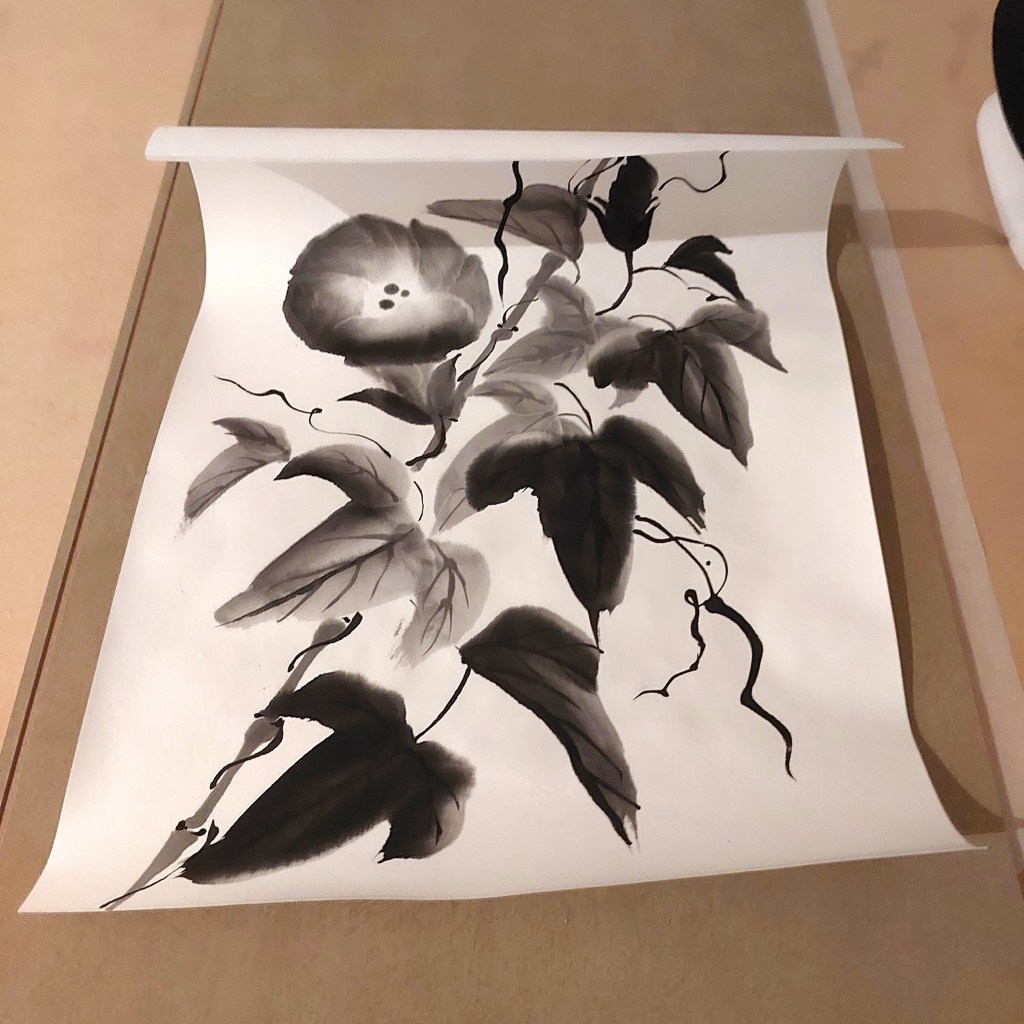
[3] Wait a few minutes until it cools down. (I might’ve ironed it on too early as it curled up a lot.) 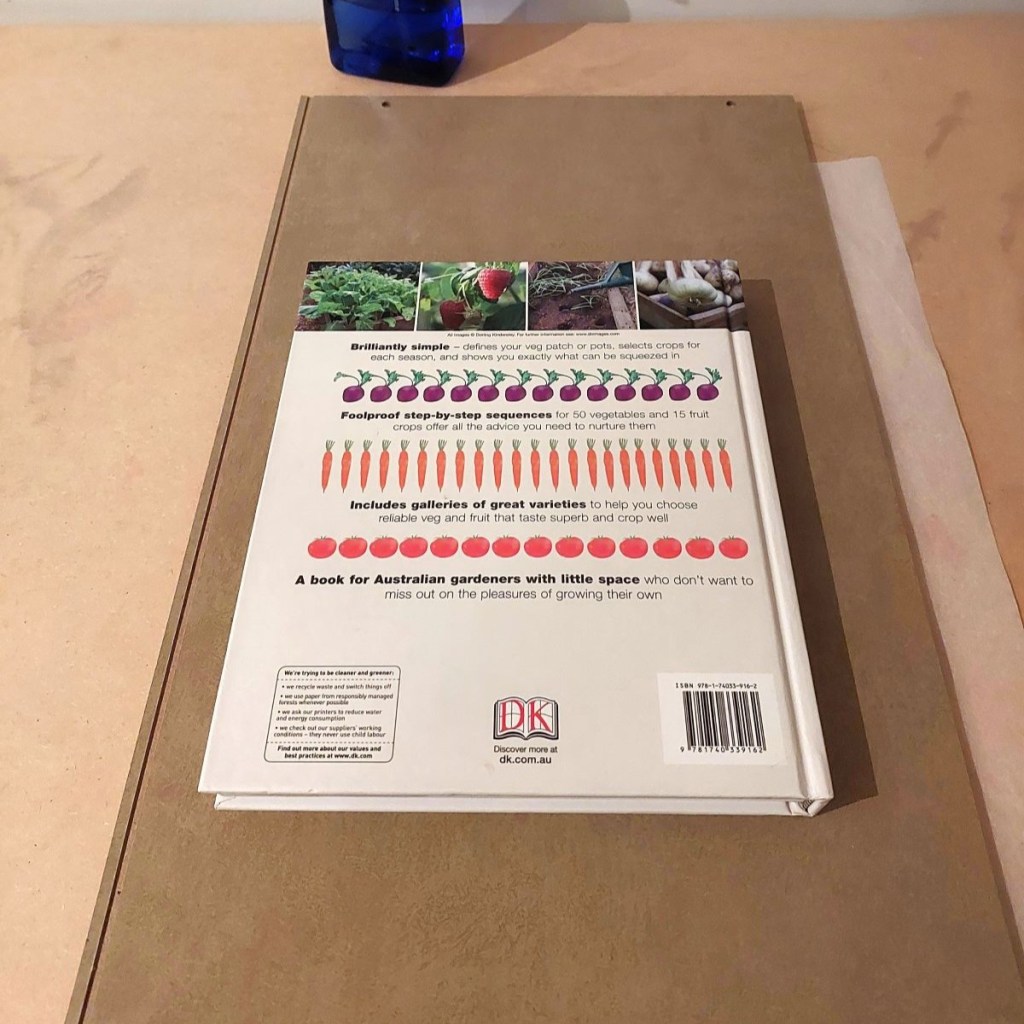
[4] Rest it under a heavy book if ut curls up (it will become flat in about 3h said the instructions). 
[5] Cut off any excess urauchi paper along the edges.
This was my second attempt so I didn’t iron it on top of felt like the instructions told me to, as fluffy bits of felt lifts up with it at the end.
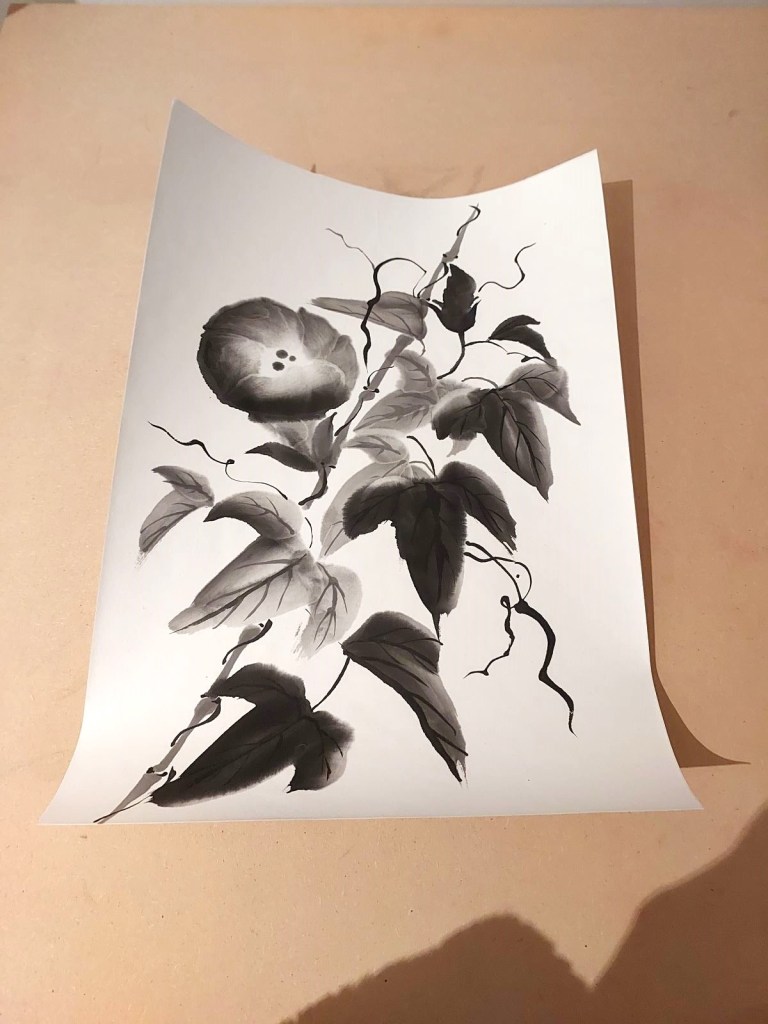
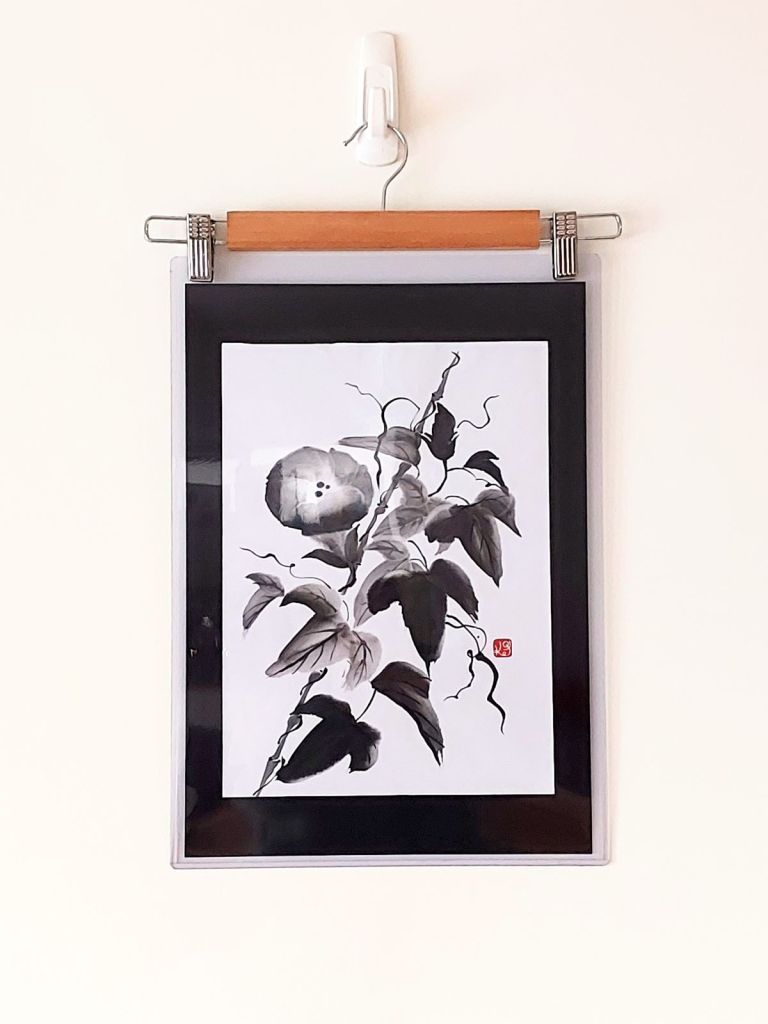
The edges did curl up and it didn’t settle completely several hours under a flat board and a book. This is a problem if displaying it as a hanging scroll, but not a big issue if framing it.
An extra step for better results
The results were much better (ie. completely flat with no curled edges) when the artwork was de-wrinkled and dried prior to ironing on the urauchi paper.
To make the sumi-e artwork flat and wrinkle free (prior to ironing on the urauchi paper):
[0] Wait until the sumi-e painting is dry.
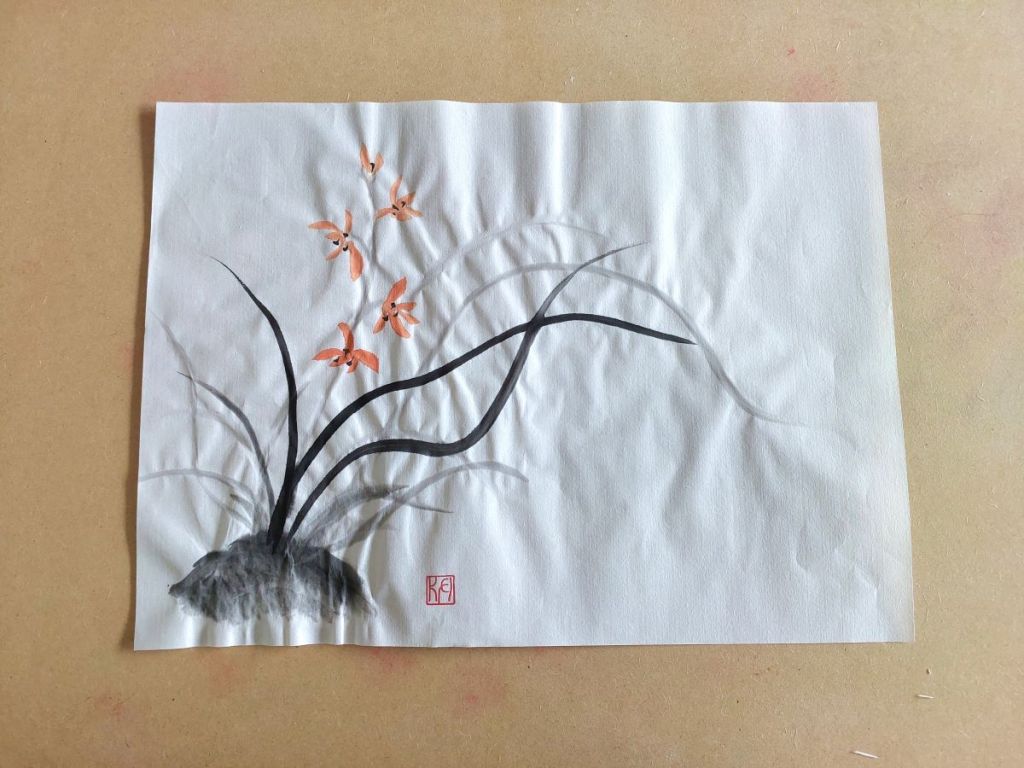
[1] Spray water onto the painting on a flat absorbent surface, until it becomes wrinkle-free.

[2] Sandwich the wet artwork between two flat absorbent surfaces (MDF and Felt worked), and place a heavy book on top.

[3] Leave until dry (overnight to be sure).
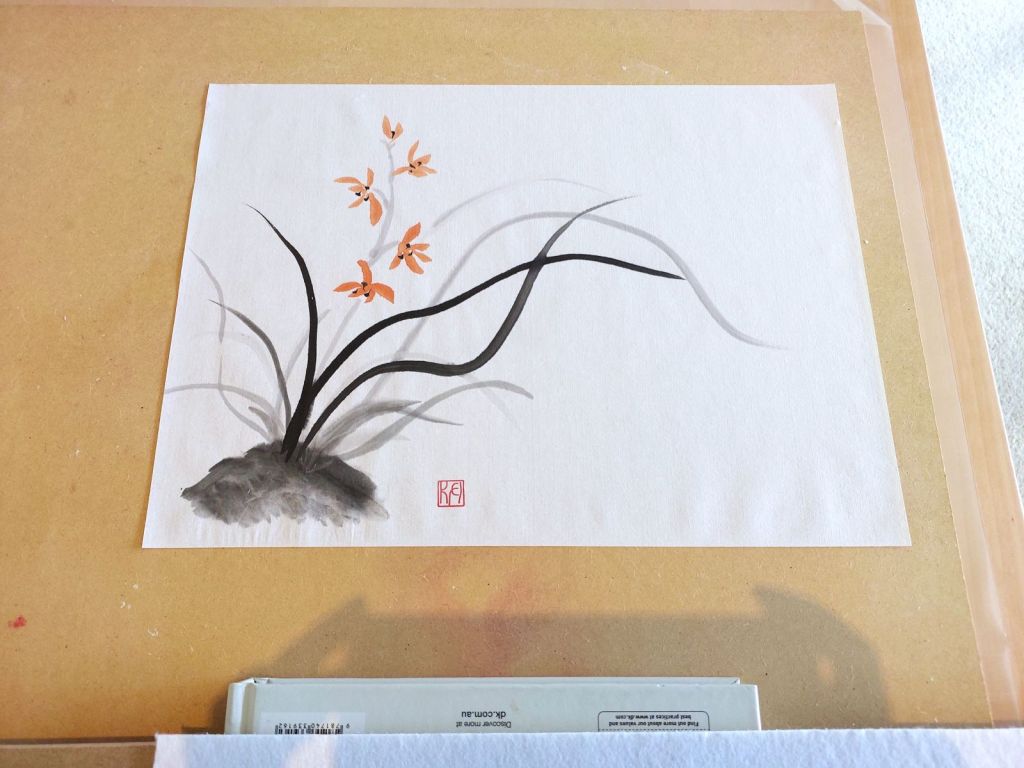
[4] Iron on the backing paper the same way as before:
- Place a sheet of urauchi paper (shiny side down) on top of the artwork (upside down).
- Iron it on, gliding the iron from middle to the edges.
- Wait a few minutes until it cools down and cut off any excess along the edges.
Here’s a comparison of the results of ironing on urauchi paper on dry de-wrinkled artwork (bamboo) vs wet artwork (morning glory flower).
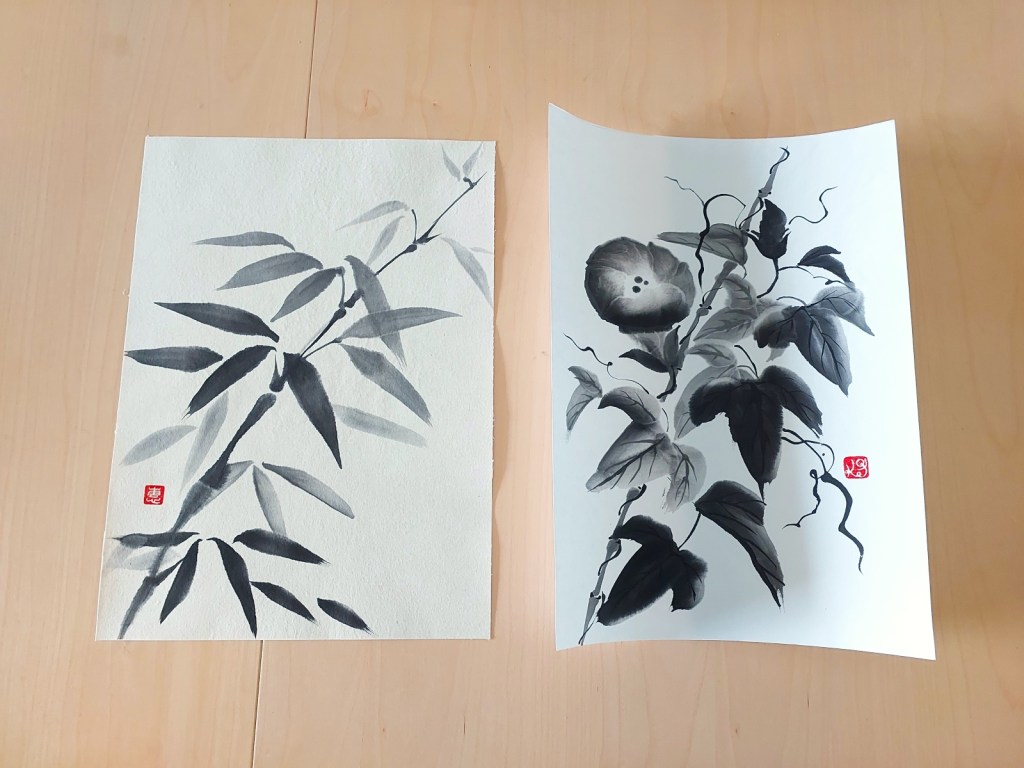

Applying the iron-on urauchi paper on dry pre-dewrinkled sumi-e painting resulted in an instant flat & backed artwork, completely stress-free.
Troubleshooting: Air bubbles
Sometimes, depending on the artwork paper, a lot of air bubbles can get trapped between the sheets after ironing the backing paper from the back.
- If the paper becomes bubbly, give it a quick iron from the front to glide the air bubbles out.
- Then, if the paper curls, place something flat on top for a couple of hours.



Comments (2)
Andreeasays:
April 4, 2026 at 10:07 pmHi, I am new to Washi paper and I paint with watercolour, I am so happy you explained and the Urachi and Joiku and now this, I had no idea! But if I wet the watercolour will that activate it and make it run? As I also use goauche and I know that will run when activated by water. I appreciate your information!
Kei Madesays:
April 5, 2026 at 12:04 amHi, I’m glad it was helpful 😀 Japanese ‘gansai’ watercolour don’t run when sprayed with water afterwards, but regular watercolour would run. Iron-on only might be OK, but I would test it out with your specific paints before backing your final artwork! Kei.