


I’ve always wanted to do shirring; wide waistbands look nice and are so comfy when they are made with shirring.
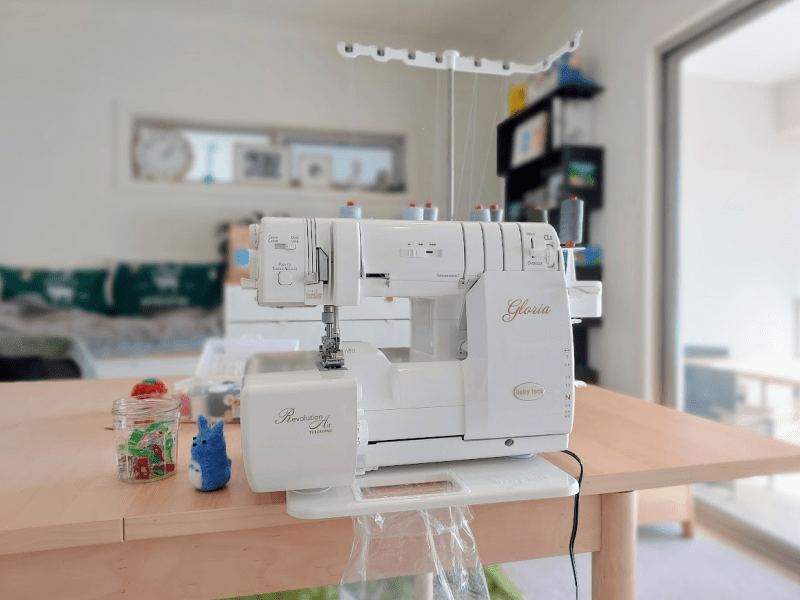
I found BabyLock’s technique PDF about Shirring using chain stitch on the Evolution, so I thought I”d try it on my Gloria/Triumph.
How to make shirring with chain stitches
According to BabyLock, the general steps and pointers were to:
- Use shirring thread in the chain looper (Gutermann recommended).
- Place the shirring elastic spool in a container behind the sewing machine so it feeds off smoothly. (Confirmed it doesn’t feed well when it’s on the spool holder.)
- Thread the shirring elastic through the telescopic guide, SKIP the tension disc, and feed it straight to the threading port.
- Use the threading wire or sacrificial thread to manually feed it through the threading port. (The air-threader worked too.)
- Thread the chain needle as usual with normal thread, into C3.
- Set the stitch length to 4, differential feed to 2, needle tension between 4-6.
- Use a normal foot and chain stitch away.


Problems encountered
I was able to make the shirring work about a fifth of the time, but I had the following issues:
- After a successful shirring, if I raised the foot to feed in the fabric for a successive shirring, the elastic shot right back through the port, so I had to re-thread it every time (or hold the elastic thread when I raise the foot).
- The elastic thread tended to disappear mid-way through shirring; the feeding is not smooth even when it’s placed in a container behind the sewing machine.
- The resulting shirring wasn’t very stretchy.
- How much it gathers depends on the fabric (it’s never double the amount even with differential feed on 2).

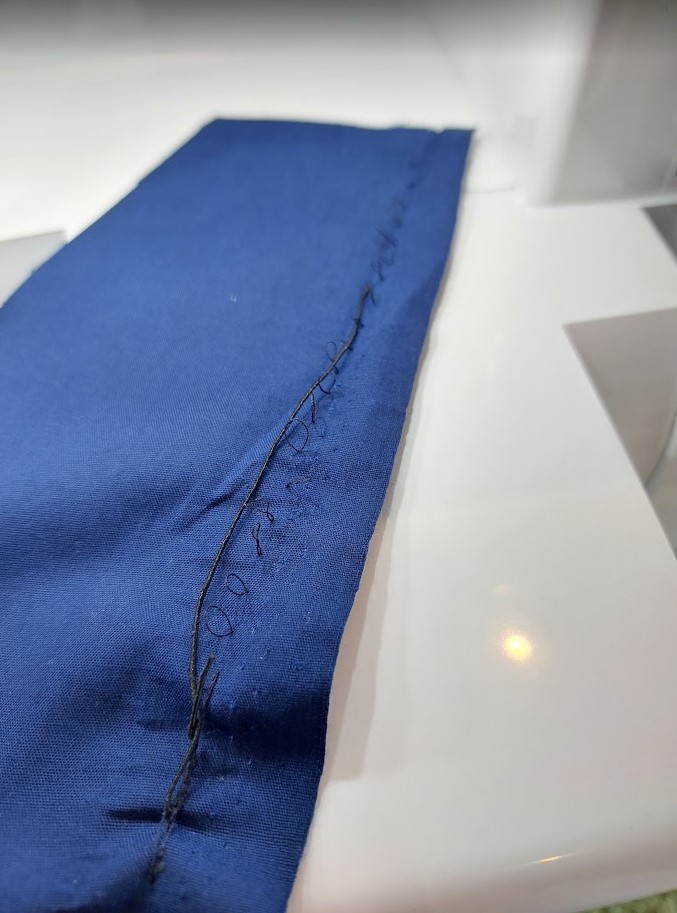

It could very well be that I am just a noob 😅; tips are welcome!
Alternative to shirring
My solution right now is to make multiple elastic casings and insert thin elastic into them (say, every two rows if making a tall section of shirring).


This way, I can
- control the amount of gathering it creates (by the length of elastic inserted);
- control how much it stretches (by the length of fabric used);
- adjust the elastic later;
- not stress about failing stitches;
- not worry about stitches unraveling (chain stitches aren’t secure like lock stitches);
So until I try shirring again one day, elastic casing it is.






Leave a Reply